South-East Vision 2050: Why Reorientation of Marginalisation Mindset is the Real Battle
Chuka Nnabuife, veteran journalist and managing director of the Anambra State Civic and Social Reformation Office, ANCISRO, in this incisive commentary, asks a very vital question Given the climate of anxiety and grievance pervading Igboland, one must ask how the ambitious South-East Vision 2050 can succeed in the prevailing lamentations about Igbo-hate and marginalisation which dominate public discourse in the region.
By Chuka Nnabuife
FEAR and pessimism remain the most potent forms of self-sabotage. Franklin D. Roosevelt captured this truth succinctly:

“The only limit to our realisation of tomorrow will be our doubts of today.” Given the climate of anxiety and grievance pervading Igboland, one must ask how the ambitious South-East Vision 2050 can succeed. Across the region, lamentations about Igbo-hate and marginalisation dominate public discourse. Rather than leveraging adversity as the Jews and African Americans did in the latter half of the twentieth century, many seem trapped in cycles of self-pity. Therein lies the deeper challenge.
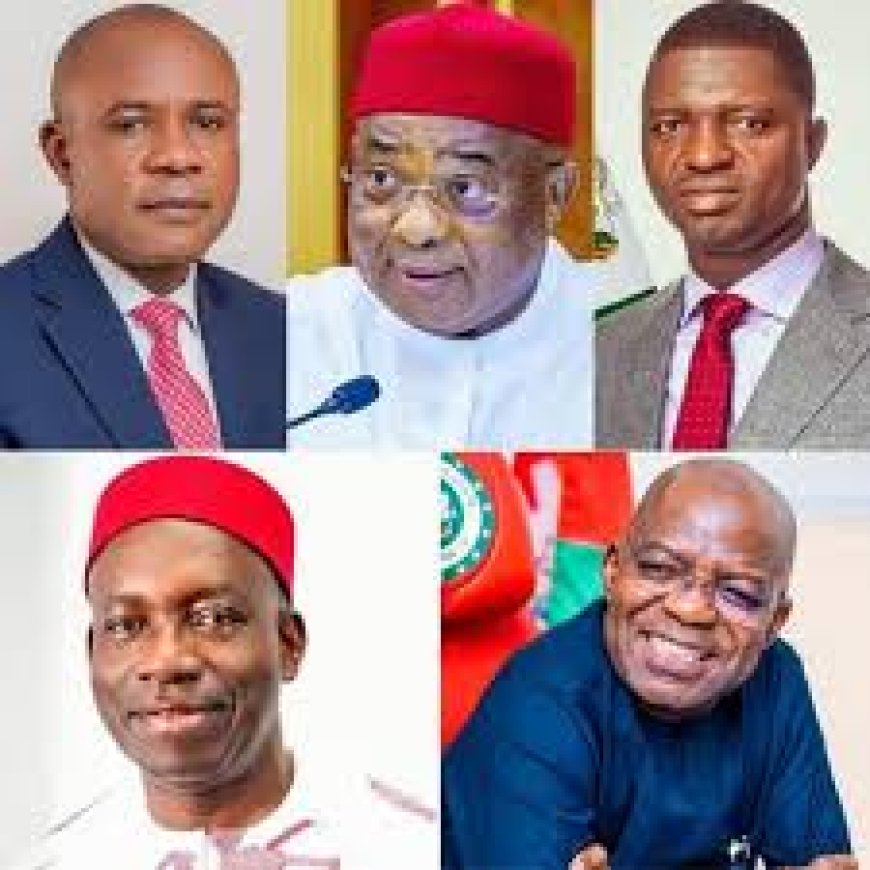
The South-East Development Summit, held from 3–6 February in Enugu, marked a defining milestone with the launch of the Vision 2050 blueprint by the newly established South-East Development Commission (SEDC). Bringing together the five governors, stakeholders, and policy experts, the summit offered a platform for bold proposals aimed at accelerating socio-economic transformation.
Governor Chukwuma Charles Soludo of Anambra State urged the region to prioritise investment and regional collaboration as pillars of sustainable growth. He challenged leaders and the intelligentsia to move beyond rhetoric and design a regional “Marshall Plan” coordinated by the SEDC — a framework for large-scale, integrated development. Central to this vision is infrastructure connectivity: inter-state railways, highways, industrial corridors, and a unified economic bloc rather than five fragmented states. Equally critical is the mobilisation of local and diaspora capital to drive industrial expansion, with strong private-sector participation.
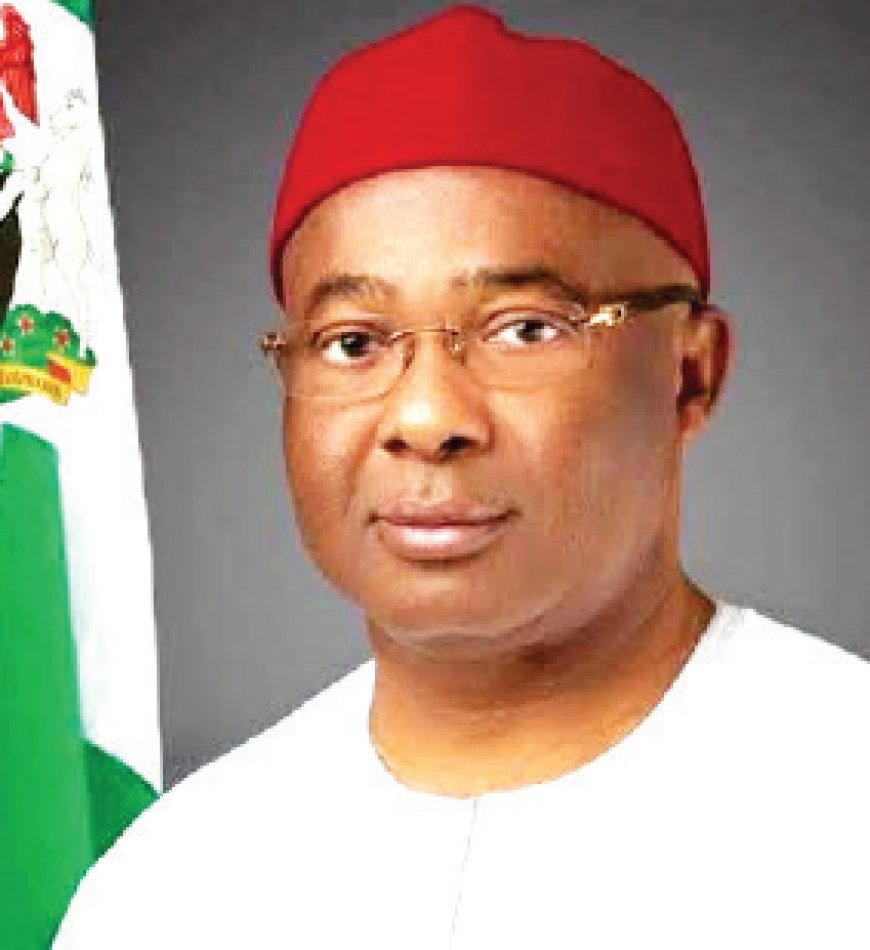
Governor Peter Mbah of Enugu State reinforced the call for integration, endorsing Vision 2050 as a long-term blueprint for coordinated growth. He emphasised synergy in planning, infrastructure, and investment attraction as prerequisites for sustainable prosperity. Governor Alex Otti of Abia State similarly described the blueprint as a decisive step toward long-term economic transformation and shared regional advancement.
Yet while the summit deserves commendation, one omission stands out: insufficient attention to socio-cultural reorientation. Economic blueprints cannot flourish where limiting mindsets prevail. Resistance to change, status quo bias, overreliance on external validation, and psychological self-limitation continue to constrain ambition. Development is as much a cultural undertaking as an economic one. Leadership reforms must be matched by a receptive and progressive followership.
Historical memory further complicates the landscape. The Nigerian Civil War (1967–1970) and the Biafran experience remain deeply embedded in the people's collective consciousness. It is a memory marked by loss, starvation, and difficult reintegration. More than five decades later, traits on marginalisation, infrastructure deficits, lack of political inclusion, unemployment and insecurity persist.
However, grievance alone cannot power transformation. As Nelson Mandela warned, “Resentment is like drinking poison and then hoping it will kill your enemies.” Memory must instruct, not imprison. Historical injustice should inform strategy, not define a people's identity.
Several strategic recalibrations are necessary.
First, the Igbo political project must be reframed around civic federalism. Calls for restructuring, devolution of power, state policing and fiscal federalism should be advanced as national imperatives, not ethnic demands. When Otto von Bismarck observed that politics is “the art of the possible,” he means that hope and smart strategy should be the hallmark. Constitutional pathways and forging broad coalitions, not rhetorical absolutism, yield durable reform.
Second, historical memory must be institutionalised rather than weaponised. The Nigeria Civil War should be properly documented, archived, and academically studied, as other societies with such collective traumas have done in the aftermath of the Holocaust, World War II, Rwanda Genocide etc. Structured remembrance acknowledges injustice without perpetuating paralysis. Justice emerges through patient documentation, lawful advocacy, and institutional reform — not escapism.
Third, the South-East’s post-war resurgence of Ndi Igbo demonstrates their power of enterprise and discipline. Within one generation, commercial hubs such as Onitsha and Aba were rebuilt, while Nnewi’s industrial clusters flourished through Igbo apprenticeship system and indigenous initiative. Beyond the zone, Igbo feats in the Diaspora show the same miraculous bounce back. This resilience mirrors David Ben-Gurion’s insight into the mindset that saw the Jews through: “In Israel, in order to be a realist, you must believe in miracles.” The region’s economic revival was not born of grievance but of grit.
Fourth, influence within Nigeria’s plural federation demands coalition-building. Issues of structural frustrations are shared across the South-South, Middle Belt, and parts of the North. Such lacks are therefore not exclusive to Ndi Igbo and not touted as such. Issue-based alliances around fiscal federalism and institutional reform are more effective than solitary agitation. As Hannah Arendt noted, “power corresponds to the human ability not just to act but to act in concert.” Collective action multiplies influence.
Fifth, internal discourse must prioritise long-term wellbeing over reactive extremism. Movements such as the Indigenous People of Biafra (IPoB) reflect genuine frustrations but risk entrenching a perpetual persecution narrative that narrows diplomatic space. Sustainable political leverage arises from structured civic engagement — policy platforms, youth leadership councils, economic think tanks, and constitutional advocacy. Mobilisation without governance rarely yields enduring outcomes.
Ultimately, the Igbo narrative must evolve from marginalisation to indispensability. The South-East remains one of Nigeria’s most literate and entrepreneurial regions, with thriving professionals across the federation and the Diaspora. The Igbo apprenticeship system (igba boi) has produced tens of thousands of self-made industrialists and money bags. These are not markers of helplessness but of capacity. Yet the hue and cry persist. No people rise beyond the limits of their own conviction. As William James argued, “pessimism leads to weakness, optimism to power.”
A balanced future for the zone should smartly situate pain within a broader story of hopeful reconstruction, innovation, and national contribution. Rather than centring discourse on exclusion, emphasis must shift toward co-authoring Nigeria’s modernisation — a position Governor Soludo consistently advances. When memory is disciplined by strategy and powered by innovation, historic suffering can yield historic leadership.
As William Shakespeare reminds us, “our doubts are traitors, and make us lose the good we oft might win.” The real battle, therefore, is not marginalisation but mindset reformation. And that is a battle the South-East can win.
• Nnabuife, Managing Director of Anambra State Civic and Social Reformation Office, ANCISRO, writes from Awka
Files

Posted by omalicha
View author profileRelated Posts
by omalicha
Nov 9, 2024
Media As Partners in Regional Development
The focus on the two regions of the Southeast and Southsouth was very timely, as these two regions seem to hav...

by omalicha
Mar 22, 2024
A Commentary On The 2024 World Water Day Celebration
This global initiative aims to raise awareness about water -related issues and advocate for sustainable manage...
by omalicha
May 20, 2026
Peter Obi’s Exit from the ADC Signals Strategic Re...
Coalition politics in Nigeria also involves merging established party structures with newly integrated blocs u...