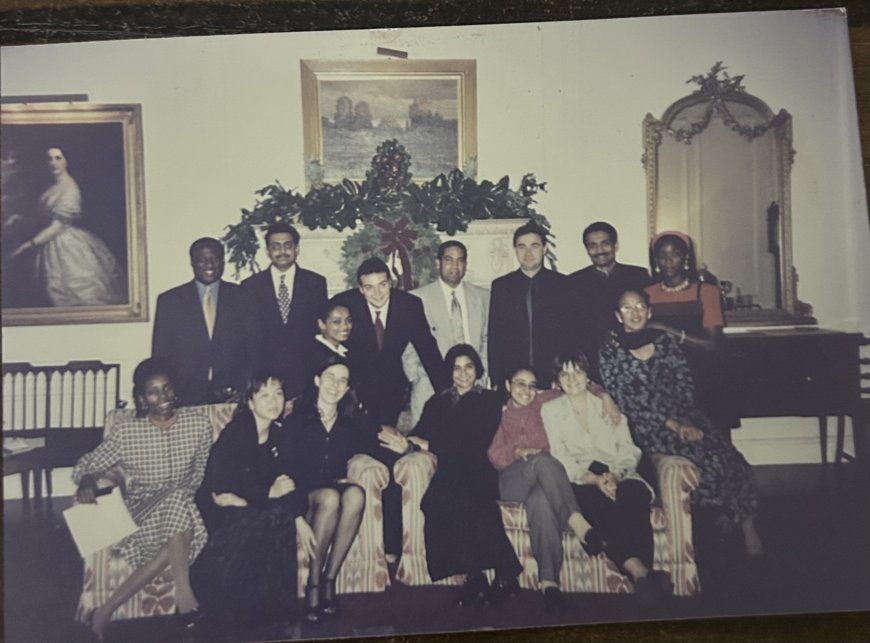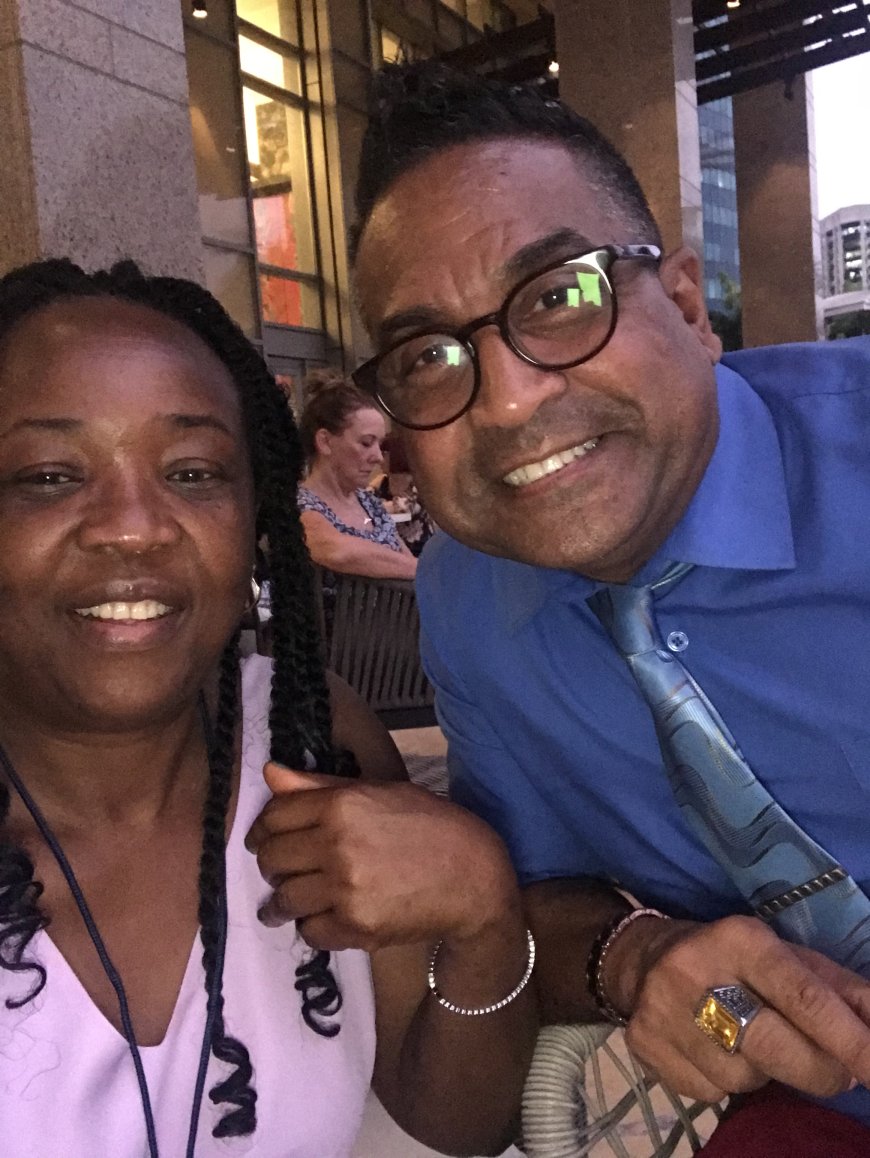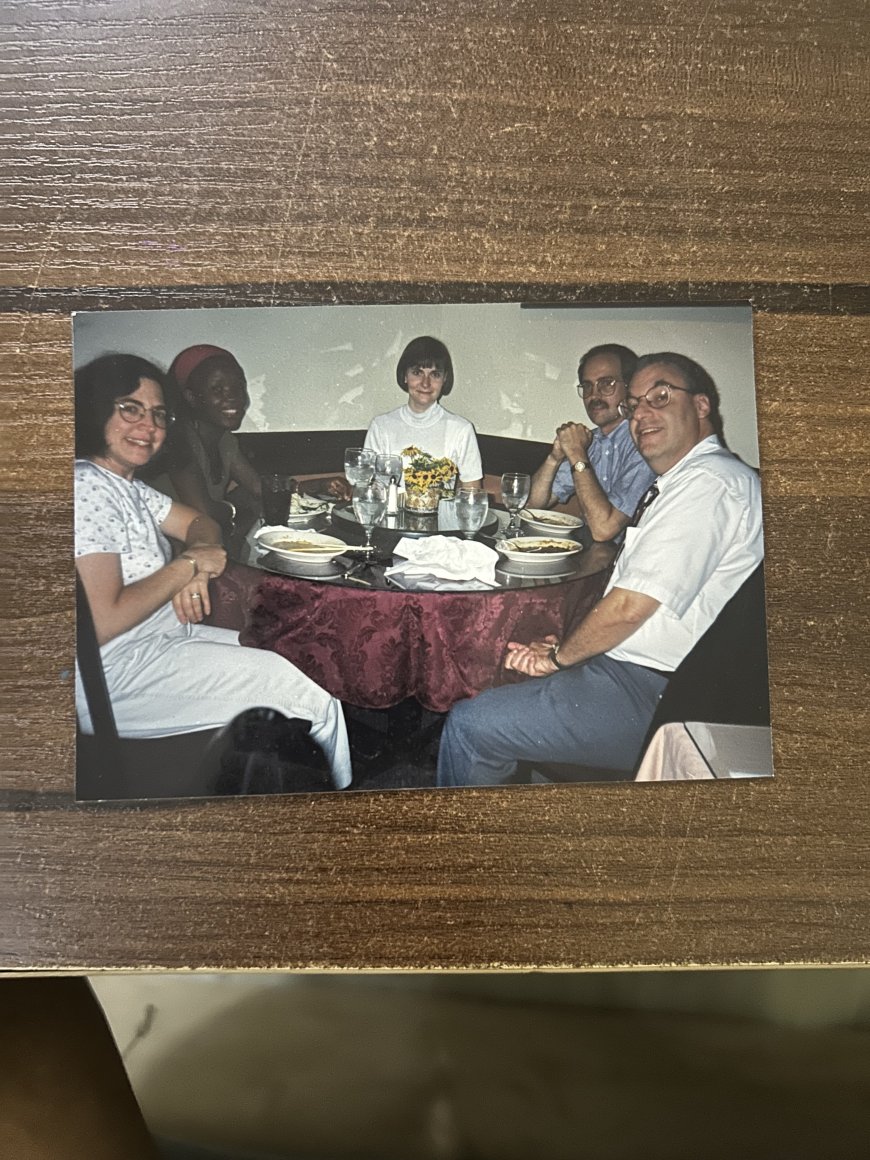
The 1998 AFPF Fellows at our pre-departure gathering in Washinton DC
By Angela Agoawike
It was a group photograph of the staff of the Post Gazette posted on Facebook by the PG’s illustrious former foreign editor, Greg Victor, that made me aware of the impending closure. Thereafter, I googled: ‘is the Pittsburgh Post Gazette closing?’ read it and got to understand better, the reason for the closure.
According to the publishers - the Block Communications-, the newspaper has, for the past two decades, experienced financial loss of over 350 million dollars. Also cited as contributing to the impending closure was a court ruling that, according to The Guardian of London (Post Gazette will not allow me read the story without a subscription), reinstated the “terms of a 2014 - 2017 labour agreement between the company and the Newspaper Guild of Pittsburgh, which embarked on a 3 years strike” after Block Communications was said to have “unilaterally, implemented changes to working conditions, including health care”. The publisher had said that the court ruling “imposes on the Post-Gazette, outdated and inflexible operational practices unsuited for today’s local journalism”.
Without taking sides, I would say that it is a tough position to be in for either party. As a worker, you want the best for yourself. That is your primary source of income, plus you have a family to care for - children to clothe and educate, plus bills to pay. So, you have a legitimate need for improved working conditions. A labourer deserves his/her wages.
Then, as an employer, you are running a business and that business is expected to generate income with which to pay those that work to grow the business. As a business owner, you also have so many responsibilities including statutory obligations to meet. The business serves the employer and the employee and none should take undue advantage of the other.
However, if you are running a business that for decades has run at, not just a loss, but one running into more than 300 million, I dare say that you have to find ways to cut your cost, and at some point, make a decision about that business. They come with impact and repercussions.
You see, when I applied for, and was chosen as one of two winners from Nigeria of the prestigious Press Fellowship that allowed me to experience the Post Gazette, I was the Woman’s Page editor at the Post Express Newspaper in Apapa, Lagos. The Fellowship gave the Fellows an opportunity to live and work in the United States for 6 months. Post-AFPF Fellowship, I was the features editor, and later became the Editor of the Sunday edition of the Post Express Newspaper - The Post Express on Sunday. I also had the opportunity to equally edit the Daily Times on Saturday and National Interest on Saturday. So, I have a fairly good idea of what it takes to either work for, or be a manager in the legacy media.
It was not the only Fellowship I had received in the course of my career, and going for the AFPF programme was also, not my first trip to the United States, as I had been there twice previously to cover the UN Preparatory Committee Meetings on the establishment of the International Criminal Court (ICC). This, however, was special: I was actually going to practise my profession in the United States.
We had come from different parts of the world - Doyin Adedeji, my co-winner from Nigeria, Ramyata Limbu (Nepal), Harvier (Uruguay), Vaguinaldo Marinheiro and Cristina Masuda (Brazil), Florencia Arbisher (Argentina), Shareen Singh and Phylicia Opelt (South Africa), Hanan Hamad (Egypt), Rory Rostand (Trinidad and Tobago. I reconnected with Rory in Port of Spain while working at the Gas Exporting Exporting Countries Forum, of which T&T is a member country), Adnan Adil (Pakistan), Moise Mannan Haque, (India), Agneizka Kosowicz, (Poland) and Eric Shimoli (Kenya), gathered at the Lincoln Suits in Downtown DC, for an orientation programme that took us to the University of Maryland, and a sit-in at one of the White House’s Press briefings, before we were dispatched across the country for a five-month-hands-on newsroom experience in some of the best newspaper organisations in the country.
The Post-Gazette was one of the great institutions in the city of Pittsburgh, with John Craig as the editor. Staff were expected to turn in copies that would stand the test of time. It was in this establishment located on Number 33 Blvd of the Allies in Downtown Pittsburgh that I found myself. I felt that I was there to let those unaware, become aware that somewhere in the world, on the incredible continent of Africa, there was a country with intelligent and multi-culturally beautiful people called Nigeria.
Outside of geographical and social construct, my sojourn at the Pittsburgh Post Gazette opened me up to a different reporting style. One of the most memorable stories I did was a report on AIDS in the Black community. On the day that I shared this front page bye-line with one of PG’s great reporters Ed Levin, I also wrote an obituary piece. I was to understand later that obituary pieces and front page bye-lines were the editor’s favourites, and I scored both on my debut.
The death of Chief M. K. O. Abiola was announced shortly after I arrived the PG in July of that year. Expectedly, it fell on me to write a piece on his death and the impact that would have on Nigeria, I was prepared, having covered that election for then Sunday Times, alongside my editor, Ejiro Gray Onobrakpeya, in his official white and red painted Peugeot 504. The election was annulled by then self-styled President, General Ibrahim Badamasi Babangida. I had also covered much of the push back/resistance - murders, demonstrations, secret meetings by human rights communities - that accompanied the annulment. Reflecting and writing on Abiola’s death from afar was a sobering reminder of the risks many, including my colleagues (senior and contemporaries) who dared challenge authoritarian power faced, and also, the cost of unfinished democratic struggles in my country, even decades after.
While working at the Post Gazette, I was privileged to cover a reception held for the visiting former vice President, Dr Alex Ekwueme, who was vying to fly his party - the People’s Democratic Party’s flag in the 1999 Presidential election, by Professor of robotics engineering, Barth Nnaji, who had made Pittsburgh home. Engaging with stories like his reinforced the importance of spotlighting Nigerian excellence around the world. I was also privileged to interact with the next generation of journalists, through my talks with students at the University of Pittsburgh, sharing my experiences and insights as a journalist from a country some of them may never have heard of.
The fellowship, which was at the height of the Clinton-Lewinsky White House ‘Affair’, also coincided with America’s 1998 election. Tom Ridge was the Governor of Pennsylvania and he visited the PG. I remember one of the staff asking him: “Governor, would you like a cup of coffee?” Governor Ridge said yes, and coffee was brought to him in a plastic cup, the type everyone was using. And yet again, one of the candidates vying for a local position was forced to pull out of the race because the media, including the PG, took him to task on the impropriety of using an helicopter to spy on his opponent in his home. I also remember an instance that the freedom of information law was invoked to get the record of a traffic offense.
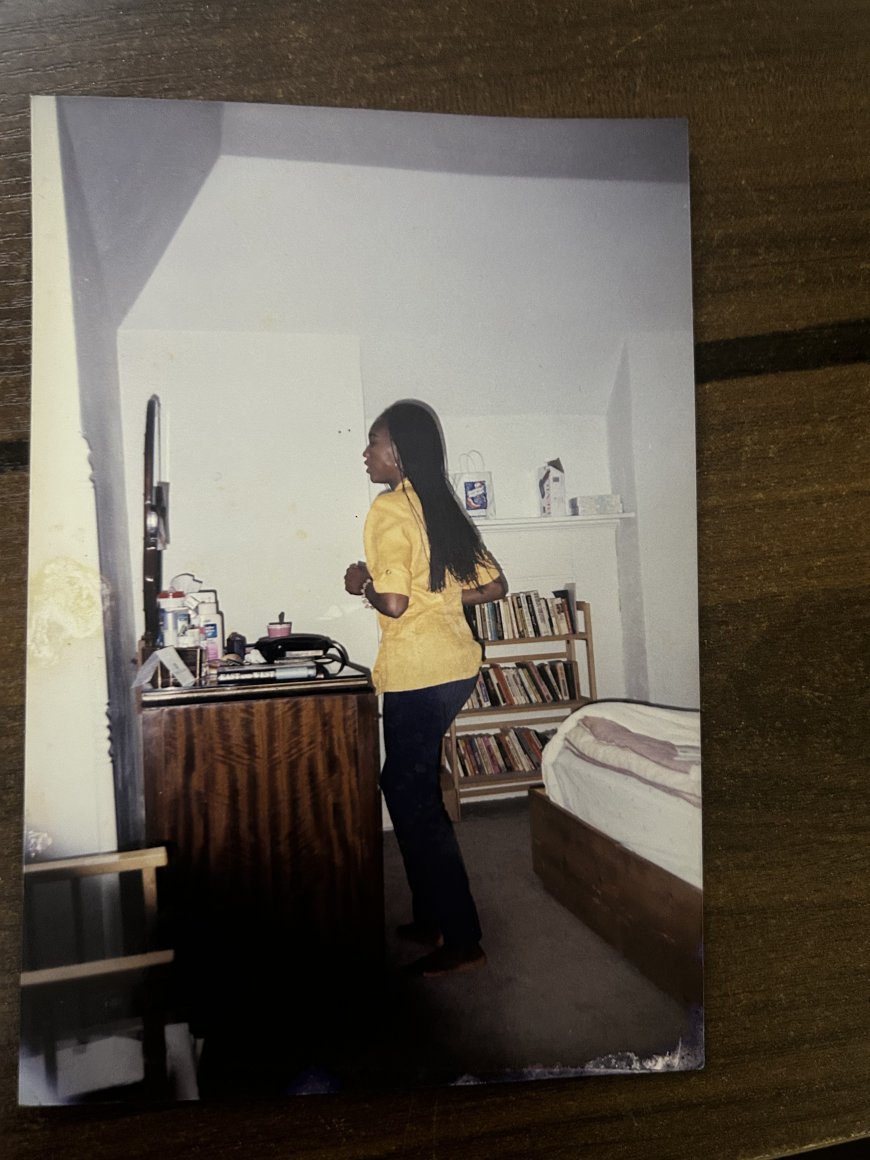
Sally Karlson, a colleague at the PG had agreed to rent the attic of her home to me even before I arrived. Her beautiful house on Squirrel Hill, stood at an intersection of the road that was bordered by a Cemetery. I remember my first night there, with nostalgic smile. Sally and her family were departing for a planned summer holiday, trustfully leaving me, a total stranger alone in their house. To “protect” myself form any ‘eventuality’, I kept a kitchen knife beside me as I slept that first night. Poor knife, I wonder what it would have done for me had there been any intruder. Sally also introduced me to some of her friends, and at one point, organised a cooking session that brought many of her female friends together for us to each prepare a meal that was local to us. I believe I cooked jollof rice, what else!
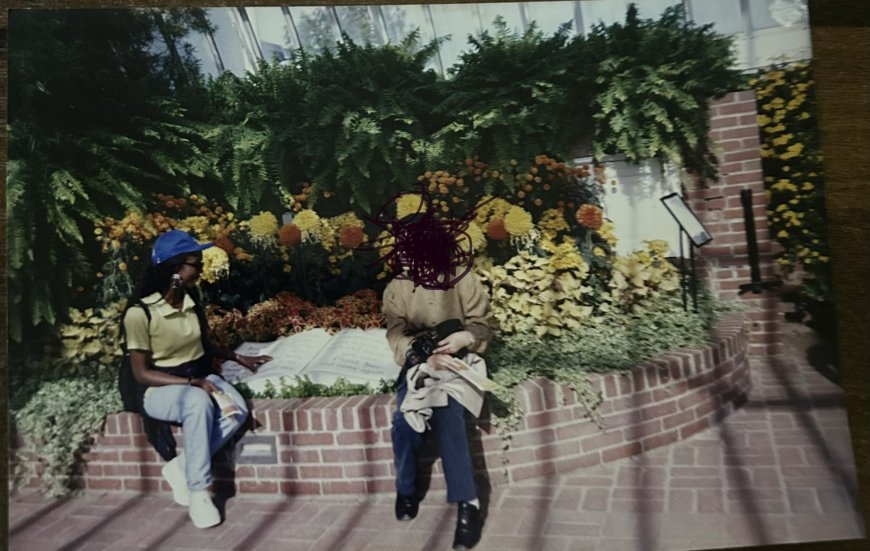
The way I was embraced by Sally’s family, especially her lovely mum Edna, who despite her advanced age, took me to visit flower gardens and other public places was awesome. I remember asking Sally why of all the people in the newsroom, including blacks, she volunteered her space. Her response was one I never forgot. She told me that she grew up in an environment where the only blacks she came in contact with were those who came to work and leave, and she wanted to have the experience of interacting with other blacks. For that, she also, consciously enrolled her daughter Zoe, in a school with black pupils. Indeed, we are not responsible for what happened before we were born, but we can help change the trajectory of our now, and be the architect of our future.
With Sally’s home as my base, I explored Pittsburgh, and other residential neighborhoods such as Duquesne, Allentown, Shadyside, Mount Washington etc. I read as many books as I could at the Barnes and Noble bookstore on Squirrel Hill. I also bought loads of them that I brought back to Nigeria at the end of my Fellowship. Pittsburgh, with its multi-cultural identity, the multicultural make-up of my own country, — reinforced my appreciation for journalism that is practised locally, but impacts globally.
The Fellowship afforded me the opportunity to also re-visit New York during our mid-term reunion, and travel to Jackson Hole, Wyoming with Shareen and Hanan for the summer Camp of the Journalism and Women Symposium (JAWS). While conversing among ourselves about how we’d love to go see the geysers in nearby Montana, there was a gentleman man sitting by us. You can imagine our surprise and happiness when one of the participants - a Washington Post Editor approached us to say that the husband told her we would like to visit Montana, we said yes and she told us that her husband would take us. I also travelled to Houston, and visited Florencier in San Antonio, both in the State of Texas.
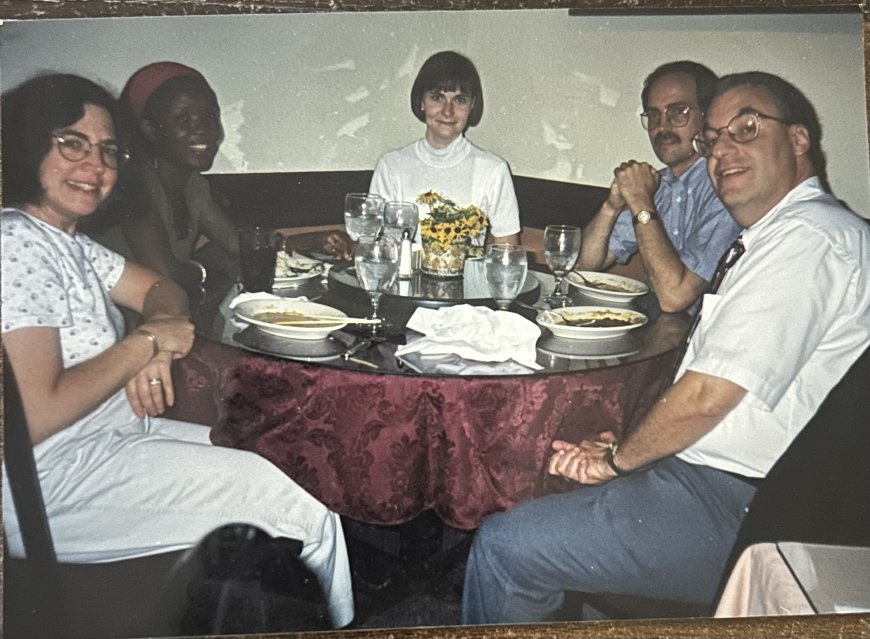
As I reflect on those six months in 1998, triggered by the looming shut down of the PG, I remain profoundly grateful to the Alfred Friendly Press Fellowship for the opportunity, and to the colleagues at the Pittsburgh Post-Gazette who opened their arms and embraced me in their newsroom - Dorothy (Dot) Conway, with whose family I spent Thanksgiving, David my mentor, Greg Victor, among others, whose names I cannot easily remember. Most importantly, I remember the lady at the ‘canteen’ who always remembered my order - ice cream and pop corn or coke and pop corn.
And as it prepares to shut its doors permanently, after 240 years, I remember a Post Gazette that helped to sharpen my reporting skills, expand my worldview, and strengthen my commitment to people-centred journalism.
Now I run my own media organisation - a radio station called Omalicha 91.1FM (listen to us via www.omalichamedia.com). I always think of the community-focused reporting that I gained from the PG, and my efforts to introduce that to radio broadcasting, bearing in mind the proximity of radio to the community.
Generally, the media plays a tripple function - keeping government accountable, performing social responsibilty role and is also a business. In order to effectively perform the first two roles, it needs to thrive as a business. To marry these competing needs, something needs to be done differently, the playbook needs to change.
The Block Communications said that they regretted the impact their “decision to shut down will have on Pittsburgh and the surrounding region”. As a proud alumni of the Pittsburgh Post Gazette, I share in that regret. I feel for the people who will lose a trusted ally, in the PG, and the great journalists who will be thrown out of employment come May 2026.