Education Is Challenged Sector in Nigeria
Nigeria’s tertiary education system faces mounting challenges, from funding and infrastructure deficits to concerns over quality, access and employability. In this interview, Prof. Abiodun Adeniyi, Vice Chancellor of Baze University, Abuja, shares his perspectives on the state of higher education, the reforms needed, and the prospects for Nigerian universities.
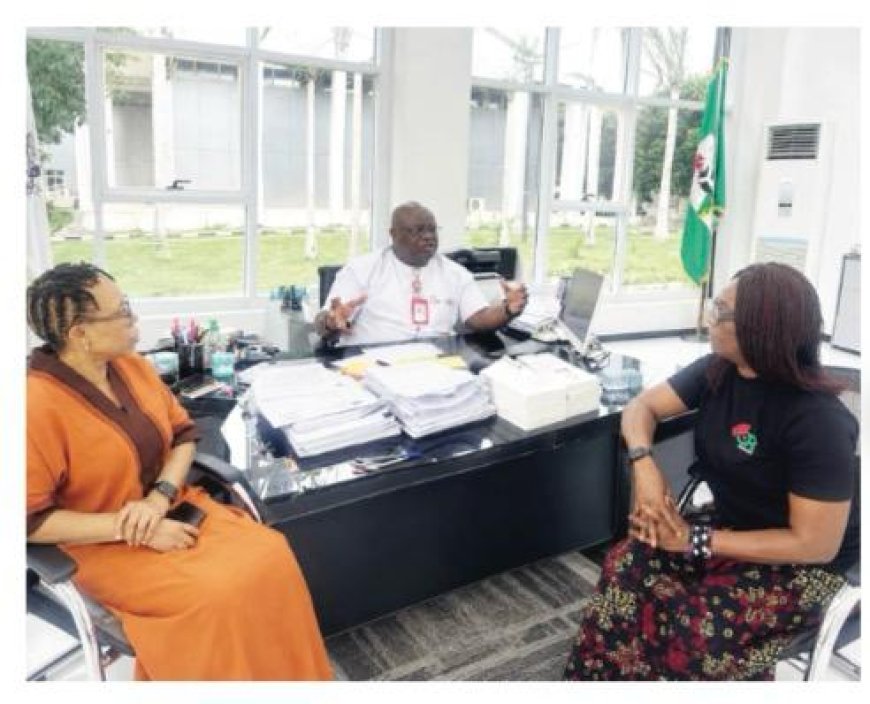
By Angela Agoawike and Juliana Anosike
As an educationist and from the vantage position you occupy, the state of education – especially tertiary education in Nigeria today. Where would you place it?
That’s a very interesting question. Tertiary education in Nigeria cannot be detached from the overall occurrences in the nation’s political economy. We exist within the bracket of the Nigerian environment, which is steeped in development crisis, crisis of progression, and resources is integral to it. So, whatever is happening within the bigger ecosystem is most likely to affect any sector, including education. Against that background, you will imagine that the educational sector in Nigeria is also a challenged sector, and of course, tertiary education is particularly not excluded. But overall, you wouldn't say operators are not doing their very best, against the background of the pronouncements, the frameworks of regulatory authorities. They are doing their best, trying to model the sector after the ideal operating system in some developed countries, particularly Western societies. The environment can be choking, but choking as it may be, it’s also benefiting from the increasing integration of the knowledge system, where knowledge sharing, knowledge production has become really integrated on account of the gains in the explosion of the revolution in communication technologies, where information can be readily accessed at the touch of the button, the increasing digitization of the information space has been very handy for assessing data. The fact that practitioners, operators in the sector, maybe learners, are also able to fetch data from different parts of the world, through the digital space, no matter how remote the distance is, it's also been very helpful. But the education sector is a very complex sector, requiring different utilities and facilities for it to function well.
We keep saying the future will be good, better than the present, and we keep getting old alongside the present. When will this future arrive for the people?
That's actually a fundamental philosophical question, but there's something about life itself... life does not require us to be in a state of hopelessness. Life requires us to keep hope alive, irrespective of the situation, as long as we are still breathing. And of course, when we are hopeful, it gives us that positive energy to be able to do things that will actually lead to the realisation of a better future. So, it's an attitudinal thing.
How would you assess Baze university’s commitment to inclusive education?
We're not joking with it. The concept of a university in itself is about universality, embracing divergencies, and making sure that you capture all persons into your community, whether they are academic, non-academic, teaching, and non-teaching. And even those who are not immediately in your environment, stakeholders who are outside, make them feel your impact, one way or the other, through your community service, through exposing your production, your activities to them, being part of the stimulation of ideas towards development, and all such things, apart from your primary responsibility of teaching, research, and community services. So, we are very diverse. Our students are drawn from all parts of the country. Our workforce is drawn from all parts of the country. The orientation of the university, is something that has continued. So, diversity, inclusivity, are part of our philosophy.
Are there policies in place to ensure students with disability are well integrated into the system? You need to just go around; that's something you can see.
You can verify, even the Senate building where I'm talking to you, look at the ramp, it's there for the physically disabled. All our buildings, factor this in. That's the inclusivity we're talking about. We try to capture all sections of the society. Those who are able and those who are challenged. Baze university has a kind of model in mind and there's no building where you don't see ramps, and within the building, you will see areas where those who are disabled can also access services on their own.
So, in addition to having the ramps for people living with disabilities, are there other facilities that are set aside, specifically for them?
We actually have a department called Student Support Unit for those who are, maybe less able, those who are challenged. We have a department that caters for them. We have specialists from the rank of professors down the line, who are in charge of these units. And of course they've been very useful. We do not discriminate, regarding those we admit or employ. Nigeria is a diverse society, a plural entity, and this is clinically reflected in our composition as a university.
The courses you offer here, how integrated are they into the Nigerian economy, such that any student who finishes here, doesn’t necessarily have start applying for jobs but are able to stand on their own in the society?
I get you, because education is not supposed to be an end in itself, but a means to an end. You're supposed to be educated such that you can go out there and be self-sustaining, and not necessarily be dependent. The expectation in the new age of interdisciplinarity, where apart from where you specialize, you should also have knowledge in other areas, so that you can be rounded and when you go out, opportunities are available, alternatives are available. We've had cases of our students graduating and becoming successful entrepreneurs. On my pages on social media, I've tried to advertise some of these students, promoting them, letting the world know what we're actually doing. These days, the world now is very fast paced and if you are cocooned in your primary area of discipline, maybe where you have your certificate, you may just find yourself unable to do any other thing, but that's not what the modern times demand.
As an academic leader, what is one urgent step, you believe Nigerian universities must take, in the next five years, to achieve an education that accommodates all - the economically and physically disadvantaged in their bid to access university education?
I think, being the kind of people that we are, it's important for opportunities to be diversified, so that inclusivity can be can be deepened, and those who are disadvantaged can also benefit from the increasingly competitive system that we are in. I think it will begin and end at the level of admonition. And it will also include government, being more sensitive to this area. And I want to believe that government has also instituted some mechanisms to integrate these ones with the NELFUND that is in place. There are opportunities, scholarship opportunities everywhere for the indigent. I can give myself as an example. I'm not sure I am from a very privileged home, you know, before I got to this stage. I never believed I could go abroad to study, but I went on account of a foreign scholarship, something I never imagined, and I was barely finishing my master's degree before I had another opportunity to do my PhD. And of course, the rest is history, like they say. So, opportunities are there. I think the problem is for people to just search, look around, be determined, be focused. But again, if I didn't do well in my education, I'm not sure scholarship would have found me. So, it's important to also be the best in what you do and, of course, recognition will come, again with the grace of God being on your side.
How can we keep the students that we train here in Nigeria in the country, or even attract them back when they finish their education abroad?
I think it's just about strengthening the microeconomy framework, ensure again that, the security system is better, that the environment is better, that they have facilities. There are utilities available over there. Their infrastructure is also better. And of course, there's also justice, fairness. We know that a system, where there's no justice, can be very stressful, very frustrating and discouraging. Over there, many of them are average Nigerian migrants, they are not interested in staying put, ultimately, they want to be home. So, it's simple things like good roads, housing quality education for their children - simple things are keeping good Nigerians out of out of this country. And that's why you see, that for those who are privileged to be able to assess those things here, they don't easily go out or say they want to go and stay there.
Baze is a private university, but it operates within the Nigerian system. So, what is the relationship between private universities, using Baze university as an example, with government agencies responsible for tertiary education, such as TETFUND?
There is no relationship. The TETFUND law does not require it to fund private universities. But they also, have also been very magnanimous in recent times, providing some opportunities for private investors, giving them maybe, small, small, scholarship, allowing them to participate in scholarship funding, test, in the production of literature and all sorts of things, you know, they've been very creative in recent times, and we commend them for that.
Talking about the infrastructure. What, in your opinion, can be done to ensure that students get accommodation within the institution instead of exposing them to insecurity outside?
Well, I think it has a lot to do with resources. With facilities that we talked about earlier on. I'm sure the average university will not mind having accommodation complete within campus; to be able to have the moral development, you know of students. But where it's not available. You also see private sector, advertising hostel accommodation outside the campus. But sometimes the economics comes in, and people think, okay, those hostels outside are cheaper than the ones in the university or something more accessible or more flexible. Such other things do come in when people are trying to decide where to stay or not to stay. But regarding morals and the moral development of students, it shouldn't rest only on the university and it's not necessarily dependent on only where the students stay. I think it all begins from the home. Again, that's why we talk about parents, guardians, stakeholders, being much more responsive to the development of their children.
Journalism seems to be losing its aura because of the avalanche of fake news, misuse of social media. Is there anything you are doing in Baze University where communication studies is being thought to ensure that journalism rises back up to its pride of place in society?
It's not the problem of journalism that is presently being challenged, and it's not really the fault of anyone. Because of high level of mutation, every profession is witnessing a re-definition. Some professions becoming extinct or largely being replaced because of the growth of some technologies, especially Artificial Intelligence. So, journalism is not excluded from this experience. We have facilities that can help people perform the work of a journalist, even though there's a minus at the level of ethics and professionalism, right? But the challenge does not mean journalism is not still a profession that requires ethic, that requires maybe ethical training. It does still require because you can spot the difference between the traditional, ethical, well-trained journalists from those that are not. Some of those that are online-based, now have different names - online personalities, bloggers, influencers, citizen journalists, and so on. It has corrupted the cycle of the trained, traditional journalists. But you cannot also dismiss them because it's technology that has brought them up, and they are also playing their own roles, even though there are limitations. Notwithstanding, every minute, people are reporters, publishers, you know, just because they have mobile phone, no matter how cheap. So, we just have to be continuously guided.
First published in IIJ NEWS, a publication of the International Institute for Journalism, Abuja
With contributions from JAMES SYLVESTER

Posted by omalicha
View author profileRelated Posts

by Stephen
Aug 11, 2023

by Stephen
Aug 11, 2023
by Stephen
Aug 11, 2023