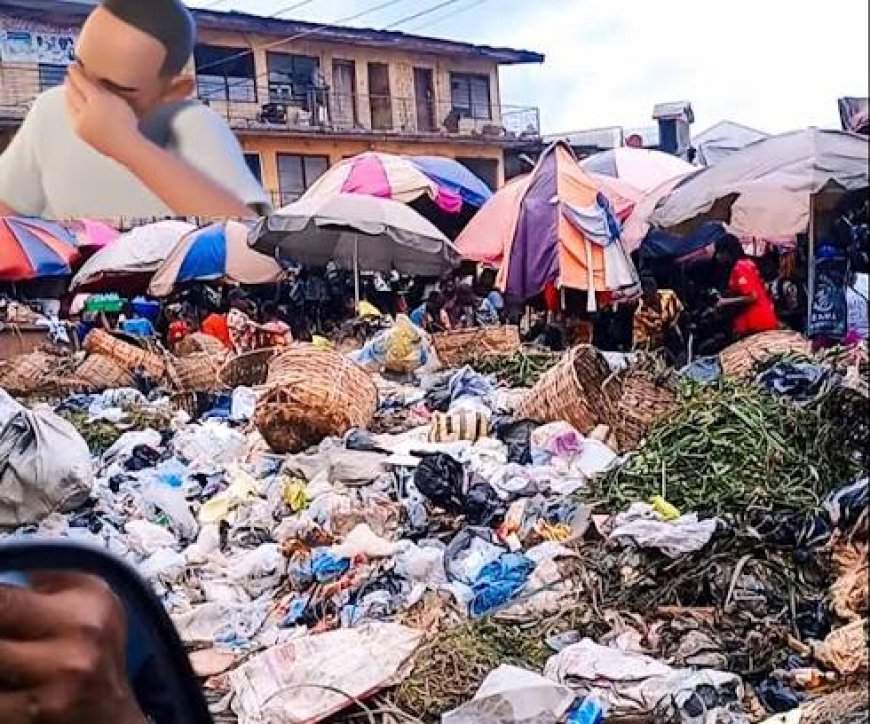
In Owerri, Imo State, Nigeria, the day often begins with movement—traders opening their stalls, tricycles weaving through the streets, children getting ready for school, and residents trying to clear their compounds. But in many parts of the city, another familiar sound rises with the morning air: the crackle of burning waste.
Waste burning is simply the act of setting waste on fire in the open. At first glance, it may look like a way of solving a problem, but in reality, it often creates new ones. People burn waste because they want to get rid of an eyesore, reduce smell, or clear overflowing refuse. But in doing so, they create air pollution, health risks, and long-term environmental damage.
For many residents, this has become a routine response to a stubborn problem. But a routine practice is not always a safe one.
Waste burning takes different forms. Sometimes it is used for entertainment, such as burning tires during celebrations or crossover nights to create a party mood. At other times, it becomes a form of protest, with tires set on fire along roads. In some places, it is even used as a signal, including by security personnel at night to show presence.
Usually, people do not just burn anything. The most common materials are used tires, plastics, papers, cables, and other refuse. In some communities, waste is burned simply to keep flies and bad odors away, especially where waste is not removed on time and human activity is close to dump sites. Traders and residents often say the smell is too much to bear, and burning seems like the fastest way to make the environment look better.
For some people, the reason is aesthetic. They do not want to look at an overflowing dump site, so they set it on fire, hoping that once it burns, the place will appear cleaner. For others, privacy matters. They burn used papers or documents because they do not want them to fall into the wrong hands. In some situations, burning is tied to ritual or religious beliefs.
There are also cases where people burn bushes around their homes or compounds in the name of pest control or disease prevention. But that often makes the problem worse. When bushes are burned, rats and other pests are driven into nearby houses in search of shelter. So instead of solving the issue, the fire creates a new one.
Some people also burn waste in an attempt to recover land from public dumping. They believe that if they keep burning the refuse, the heap will go down little by little. Others see it as a form of resource recovery. They collect cables and burn off the plastic coating to recover copper, or burn tires to extract metal. But this comes with toxic smoke and harmful pollution that many do not fully understand.
The truth is that waste burning often happens for three major reasons: waste is not evacuated on time, waste is dumped too close to where people live or do business, or there is no proper waste storage and management system in place. Sometimes the problem is poor equipment. Other times, there is no management plan at all. And when those systems fail, people turn to fire as a quick fix.
In markets, residential areas, and roadside dump points across Owerri, waste is often burned to make space, reduce smell, or clear out refuse that has no immediate collection point. Plastic packaging, food waste, nylon bags, old tires, cables, and other household garbage are commonly thrown into open fires.
For many residents, this has become a routine response to a stubborn problem. But a routine practice is not always a safe one.
Mrs. Catherine Okafor, a trader at Relief Market, Owerri, said evacuation delays and not knowing the right place to dispose of their waste make most traders burn their waste.
Mrs. Ngozi Eze's concern is shared by many traders and householders across the city. When waste begins to pile up, people look for the fastest way to remove it, especially when collection is delayed or unavailable.
Mr. Peter Njoku, who resides in Owerri, said burning waste is the best way to dispose of refuse rather than pouring it inside a gutter or drainage for the rains to wash it away. He added that it saves stress and keeps the environment clean.
Like Peter Njoku, many also struggle with not knowing where to dispose of their waste or having a close dumping site that would make waste disposal easier. So when waste stays too long, people look for the fastest way to remove it. This was the case for another resident, Michael Akubueze, who disclosed that the distance to where refuse is disposed of makes burning it the fastest alternative.
When waste burns, especially plastics, cables, tires, and other synthetic materials, it releases harmful pollutants into the air. The release of toxic compounds like pH, polycyclic aromatic hydrocarbons, sulfur compounds, lead, mercury, and particulate matter can irritate the eyes, nose, and throat. They can also worsen asthma, damage the lungs, and increase the risk of long-term illness.
Children, older adults, pregnant women, and people living with breathing or respiratory problems are among the most vulnerable. According to Mr. Famous Chukwuemeka, a public health personnel and microbiologist, when these vulnerable people inhale polluted air, it can aggravate their condition.
Chukwuemeka added that children are more vulnerable because their bodies are still developing, and when they breathe in such polluted air, it becomes toxic to their health. What looks like a small fire in one compound can become a serious health burden for an entire neighborhood.
The damage does not end with breathing problems. Open burning also harms the environment. According to Professor Okechi Azuwuike, an environmental expert, waste burning is a means to get rid of a problem and create another. It may remove the visible refuse, but it also produces serious air pollution, health risks, and long-term environmental damage. He added that controlled incineration can limit some risks, but open waste burning produces the most harmful mix.
On how it affects the environment, he said that ash and partially burned plastics clog drains and wash into waterways, worsening floods and causing algal blooms. Residues and heavy metals persist in soil and water for decades and enter the food chain, harming crops, fish, and human health. Fires can also spread to nearby infrastructure and destroy valuable recyclables, undermining the local circular economy
In Owerri, people living near open waste points and roadside burning spots often wake up to smoke, bad odors, and dirty surroundings. Traders open their shops with the smell already in the air. Children walk through the haze on their way to school. Families keep windows shut, even in hot weather, just to avoid the smoke outside.
As the smoke lingers, it becomes clear that waste burning is no longer only a sanitation issue. It has become part of the lived experience of many residents.
However, people burning waste instead of taking it to a disposal site usually comes down to a mix of access, cost, convenience, and knowledge gaps. A sanitation officer, Chiekezin Odinakachi, who works with IMO SURWASH, Imo State branch of Nigeria's Sustainable Urban and Rural Water Supply, Sanitation and Hygiene (SURWASH) Programme shares what they see in the field.
Chiekezin Odinakachi sees the connection clearly. What begins as refuse on a street corner can become smoke in the air, waste in the drains, and flooding in the neighborhood. In that way, waste burning creates a chain of problems that keep feeding one another.
The people most affected are often those with the least control over the problem. Residents near dump sites, traders in crowded markets, and low-income families living in dense neighborhoods carry the burden of smoke and filth more than anyone else. When waste is burnt, whatever is released will not just be limited to the surrounding atmosphere; it affects entire communities, thereby exposing a large population to these pollutants.
A community leader in Owerri, Adolphus Oguma, who was really troubled by the indiscriminate burning of refuse, said that what the people of Owerri need is proper waste collection, not burning.
Adolphus Oguma says the issue is not only about individual behavior. It is also about systems, services, and responsibility. Without better collection, storage, and disposal, people continue returning to the same harmful habit.
His point brings the conversation beyond blame and toward the larger question: What kind of support do communities need to stop burning waste in the first place?
There are better ways to manage waste in Owerri. Households can separate organic waste from plastics. Food waste can be composted. Recyclable materials can be collected instead of burned. Local authorities can improve waste collection and enforce anti-burning rules.
Professor Okechi Azuwuike has urged local authorities and community leaders to improve waste collection services, invest in proper disposal infrastructure, and run mass awareness campaigns so residents understand the dangers of burning trash and the need for safer alternatives. He added that policy enforcement is needed to curb the practice and protect both the environment and public health.
Community education is important, but it must go together with regular waste collection and stronger enforcement. When residents know the risks and also have access to proper collection, the temptation to burn waste becomes easier to resist.
And change begins when the community is given a practical alternative to fire. Supporting the motion for an alternative to open waste burning to ensure the safety of people and the environment, Mr. Famous Chukwuemeka, the public health microbiologist, added that public health measures like proper siting of waste collection sites should be implemented; waste should be burnt in an area far away from where people live; improved recycling should be done; and the state government should come up with serious legal and regulatory measures, engage the services of public health experts and scientists who can weigh the air quality, check the amount of particulate matter, toxic gases, and microbial load suspended in the air, and take measures to make sure that the air is purified.
Waste burning may look like a small act, but its consequences are wide. It affects the air people breathe, the health of children, the safety of neighborhoods, and the quality of life in Owerri.
A cleaner city is possible, but it begins with a simple decision: stop burning waste, and build better ways to manage it.
Owerri deserves clean air, safe streets, and healthy communities. The future of the city depends on what we do with its waste today.